
Offshore Development Company: How to Build a High-Performance Remote Engineering Team
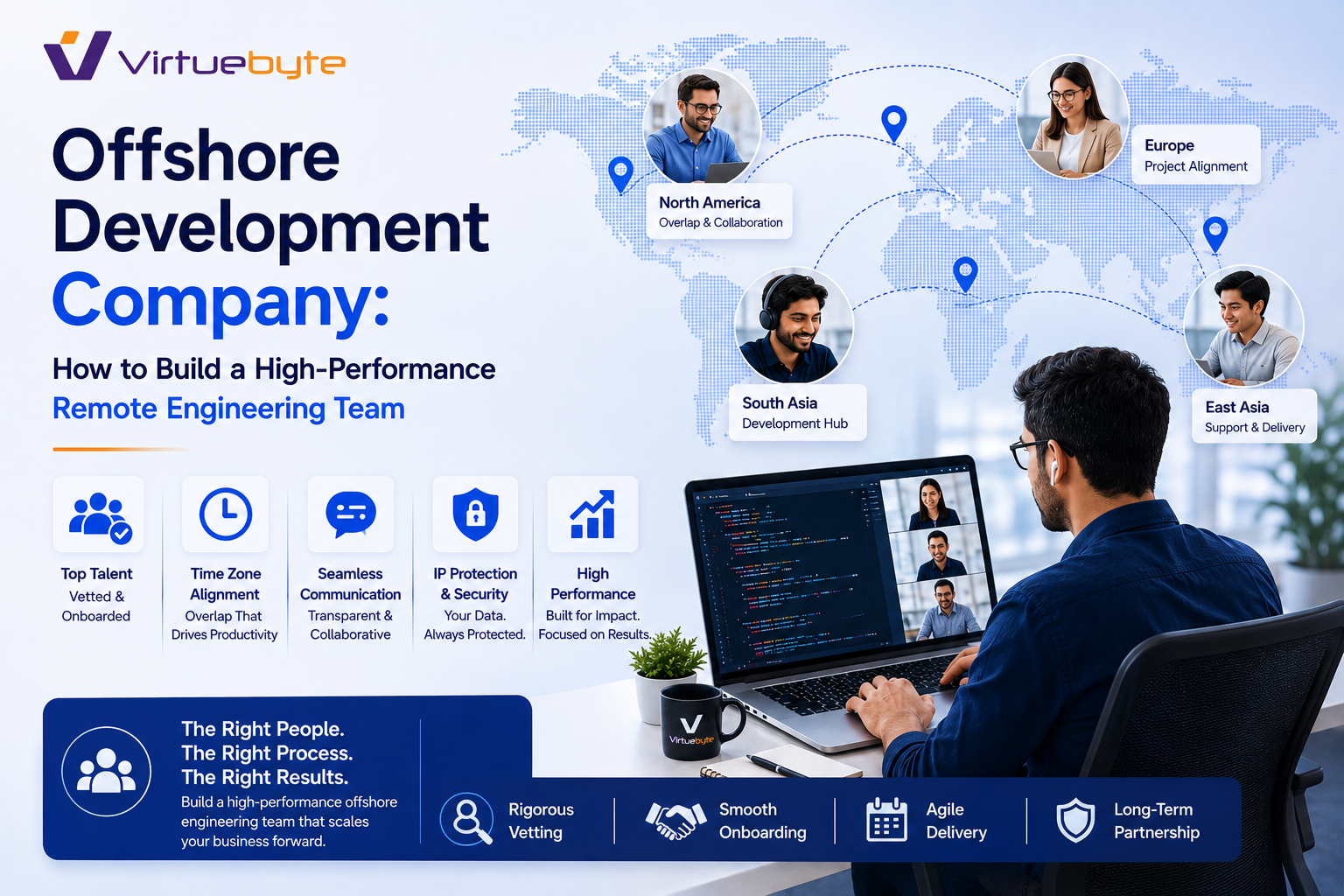
/Offshore Development Company: How to Build a High-Performance Remote Engineering Team
The question most Austin companies are wrestling with in 2026 isn't whether to build offshore engineering capacity. That debate is largely settled. The real question — the one that keeps coming up in founder conversations, engineering leadership offsites, and post-mortems — is how to do it without landing in the same traps that have burned other companies before them.
You've probably heard the stories. Missed timelines that nobody flagged until two days before the deadline. Code that held together in staging and fell apart in production. Developers who were technically polished in the interview and genuinely inexperienced when real deliverables were on the line. Communication that was fine, until the moment it mattered most and stopped being fine entirely.
Those outcomes aren't flukes, and they're not evidence that offshore development doesn't work. They share a consistent root cause: the engagement was structured as a cost-reduction exercise rather than a team-building one. The companies that consistently get distributed engineering right — across Austin headquarters and remote teams — treat working with an offshore development company the same way they'd treat any serious engineering hire. Clear standards. Structured communication. Real investment in the relationship. And accountability that runs in both directions, not just down.
What follows is a practical guide to building that kind of engagement — not a theoretical one.
Why the Offshore Model Is Maturing and What That Means for Austin Companies
The offshore development landscape in 2026 looks meaningfully different from five years ago. The talent markets in India — particularly Pune, Bangalore, and Hyderabad — along with Eastern Europe and Latin America have produced engineers who aren't just technically capable but product-fluent. These are developers who are comfortable working inside agile teams, communicating directly with founders and PMs, taking ownership of system design decisions, and raising concerns about architecture tradeoffs rather than waiting to be told what to build.
The old narrative — that offshore means junior talent executing tasks for senior engineers onshore — has been outdated for years. What hasn't kept up is how many Austin companies actually structure the relationship when they engage an offshore development company in Austin.
Most of the failures that get attributed to offshore development aren't talent failures. They're process failures. Missed deadlines, poor code quality, knowledge evaporating when a developer rotates off, these are symptoms of unclear communication structures, undefined ownership, rushed onboarding, and performance expectations that existed in someone's head but never made it into writing. The talent was often there. The framework for channeling it wasn't.
Building the Foundation: What High-Performance Offshore Teams Actually Require
Before anyone writes a line of code, the work that decides whether an offshore engagement succeeds or quietly erodes is organizational, not technical. Get this part right and the technical execution follows. Skip it and you'll be troubleshooting the wrong things for months.
Technical vetting that goes beyond the resume
Most offshore candidates present well. The gap between interview performance and actual day-to-day delivery is exactly where the most expensive hiring mistakes hide. The vetting process that holds up over time goes further than a coding challenge or a portfolio review.
Real-world task assignments in your actual stack not abstract algorithm problems reveal far more about how someone works. At least one session reviewing production code they've actually shipped is worth more than three portfolio walkthroughs. Ask them to talk through a debugging scenario they navigated, or explain a technical tradeoff they had to make under time pressure. The specificity of those answers is the signal. Generic answers tell you someone can interview. Specific ones tell you someone has done the work.
Onboarding as a strategic investment
Offshore engineers who receive thorough onboarding, real product context, a proper codebase walkthrough, an understanding of who the customer is and why certain decisions were made, deliver more, sooner, and come back with far fewer rework rounds. This isn't a controversial claim. It's what consistently shows up in project retrospectives.
The companies that treat onboarding as a cost to minimize get slower ramp-up curves and higher rotation rates. Developers who don't understand the product don't develop ownership of it. And developers without ownership don't flag problems - they just complete tickets.
A practical onboarding structure for offshore teams includes: a written product brief the developer can return to independently, a structured codebase walkthrough with an existing engineer (not a recorded video from two years ago), a small starter task with detailed feedback before any production work, and documented examples of what good work actually looks like in your codebase — not a generic quality standard but specific, real examples from your own repository.
Time zone alignment — enforced, not assumed
This is the failure mode that shows up most consistently and gets dealt with most casually. The assumption that time zone overlap will get sorted out informally is almost always wrong. It doesn't. It becomes a slow drain on iteration speed and a recurring source of miscommunication that nobody names directly until something goes sideways.
Define the overlap requirement before the engagement begins. A minimum of three to four hours of live working time during Austin business hours is a reasonable baseline. Put it in the contract. Test it during a paid pilot before you scale. Teams that operate asynchronously for most of their interaction produce slower iteration cycles, more preventable misunderstandings, and longer bug resolution timelines.
VirtueByTech's offshore development centers operate with structured overlap protocols — overlap hours are contractually defined, not negotiated engagement by engagement. That distinction matters more than it might appear on paper.
Communication Architecture: How the Best Offshore Teams Actually Work
The communication structure inside an offshore engagement is what determines whether a distributed team operates as a genuine extension of your product organization or as a separate unit that occasionally delivers deliverables into a Jira backlog. The difference is operational, not philosophical — and it shows up in the quality and coherence of what gets shipped.
Sprint rituals need to be non-negotiable. Sprint planning, daily standups, sprint reviews, retrospectives — these aren't optional ceremonies that can be dropped when the time zone overlap gets tight. They're the structural anchors that keep distributed work pointed in the right direction. The teams that skip these because of scheduling friction are the ones that end up with work that has quietly diverged from the product roadmap over three or four sprints, in ways that are expensive and disruptive to correct.
Async documentation isn't a nice-to-have. For offshore teams, it's infrastructure. Loom for async video context, Notion for living product documentation, Jira or Linear for clean and well-maintained backlogs — these tools are what make the hours of actual overlap productive rather than catch-up sessions. When async documentation is thin, overlap hours get consumed by status updates that should have happened in writing. That's not a communication problem. It's a documentation problem masquerading as one.
Escalation pathways need to be explicit and written down. One of the most common and least-discussed failures in offshore engagements is the blocker that sits unreported for two or three days because nobody told the developer who to go to when they hit a problem outside their defined task scope. This isn't a developer failure. It's an onboarding failure. Define the escalation path in writing, during onboarding, before the first sprint begins.
IP Protection and Legal Considerations for Austin Companies
IP protection in offshore development is genuinely less complicated than most founders assume — provided the right conversations happen at contract stage rather than after something goes wrong. The essentials aren't exotic: non-disclosure agreements that cover both the active engagement and a reasonable post-engagement period, IP assignment clauses that transfer all work product to the client on creation rather than on final payment, and explicit clarity about which legal framework governs the contract.
For Austin companies working with offshore development companies in Pune or other Indian cities, the relevant framework is a combination of US contract law on the client side and Indian IT Act provisions on the delivery side. Most established offshore firms operate under standard agreements that satisfy both jurisdictions. The key step is actually reviewing those agreements specifically — not accepting default terms on the assumption that they're adequate, because sometimes they're not.
Security practices deserve the same level of explicit attention. Code repository access management, mandatory two-factor authentication, VPN requirements for accessing client systems, and documented data handling protocols for any customer data the offshore team touches — these aren't bureaucratic overhead. They're what separates an offshore development company Austin engagement that passes an enterprise client's security review from one that creates a liability the client wasn't expecting.
The Metrics That Actually Tell You If Your Offshore Team Is Working
Measuring offshore team performance through lines of code written or tickets marked done is a reliable way to incentivize exactly the wrong behavior. The metrics that actually correlate with delivery quality are more nuanced and they require a bit more discipline to track.
Sprint velocity over time tells you whether the team is delivering a consistent and growing amount of work each sprint, or whether there are recurring drops that signal planning problems, hidden blockers, or scope ambiguity that nobody is naming.
Bug discovery rate post-deployment is the most direct signal of code quality and QA process health. How often is work reaching production with defects that weren't caught before release? Trend this over time rather than reacting to individual incidents.
Time from blocker identified to blocker resolved measures communication health more than technical capability. Long resolution times almost always indicate a gap in how problems get surfaced and escalated not that the team lacks the ability to solve them.
Onboarding ramp time for new team members is an indirect but useful measure of documentation quality and institutional knowledge transfer. If every new developer takes three months to reach productive output, that's a documentation and knowledge management proble not a hiring one.
Building a Team, Not Managing a Vendor
The framing that determines whether an offshore development relationship works or slowly deteriorates is simple: is the Austin company treating this as a vendor management exercise, or as a team-building one?
The practical differences are concrete and consistent. How much product context does the offshore team actually receive? How much genuine ownership are they expected to take and supported in taking? How seriously are the communication structures enforced when following them becomes inconvenient? How quickly and specifically does feedback flow back to developers after delivery?
The companies getting offshore development right in 2026 are not uniformly the ones with the largest headcount or the most sophisticated technical infrastructure. They're the ones that built the relationship deliberately holding the offshore team to the same standards they'd apply to any engineering hire, regardless of geography, and investing in the structures that make those standards achievable across time zones.
If you're evaluating how VirtueByTech approaches offshore development and dedicated remote teams, the right starting point isn't a rate card. It's a conversation about your specific engineering gaps, your timeline, and what good actually looks like for your product — then working backward from that.
\
Related Blog Posts

When Business Growth Outgrows the Way Work Gets Done
Business growth does not only bring more customers, employees, and revenue. It also changes how work needs to move through the organization. Learn how growing businesses can recognize when existing processes are no longer supporting the way the business operates today—and how better processes and technology can help reduce unnecessary complexity.
Learn More
The Silent Costs Businesses Don't Measure: How Everyday Operational Inefficiencies Impact Growth
As a business grows, the challenges are not always about finding more customers or hiring more people. Sometimes, the bigger challenge is managing the work that already exists. Manual follow-ups, repeated data entry, delayed approvals, and disconnected systems can quietly consume time and slow growth. This article looks at these everyday operational costs and why businesses should pay attention to them before they become bigger problems.
Learn More
The Silent Costs Businesses Don't Measure: How Everyday Operational Inefficiencies Impact Growth
As a business grows, the challenges are not always about finding more customers or hiring more people. Sometimes, the bigger challenge is managing the work that already exists. Manual follow-ups, repeated data entry, delayed approvals, and disconnected systems can quietly consume time and slow growth. This article looks at these everyday operational costs and why businesses should pay attention to them before they become bigger problems.
Learn More